Same Brand, Different Market: A Better Way to Compare Competitor Ads
A competitor’s ads can look different from one market to the next for reasons that have nothing to do with strategy. Rule out the dull explanations first, then compare.
Ad8 Journal
Better questions. Inspectable evidence. Original ideas worth testing. Field guides for the work between finding an ad and deciding what to make next.
New articles every two days.
A competitor’s ads can look different from one market to the next for reasons that have nothing to do with strategy. Rule out the dull explanations first, then compare.
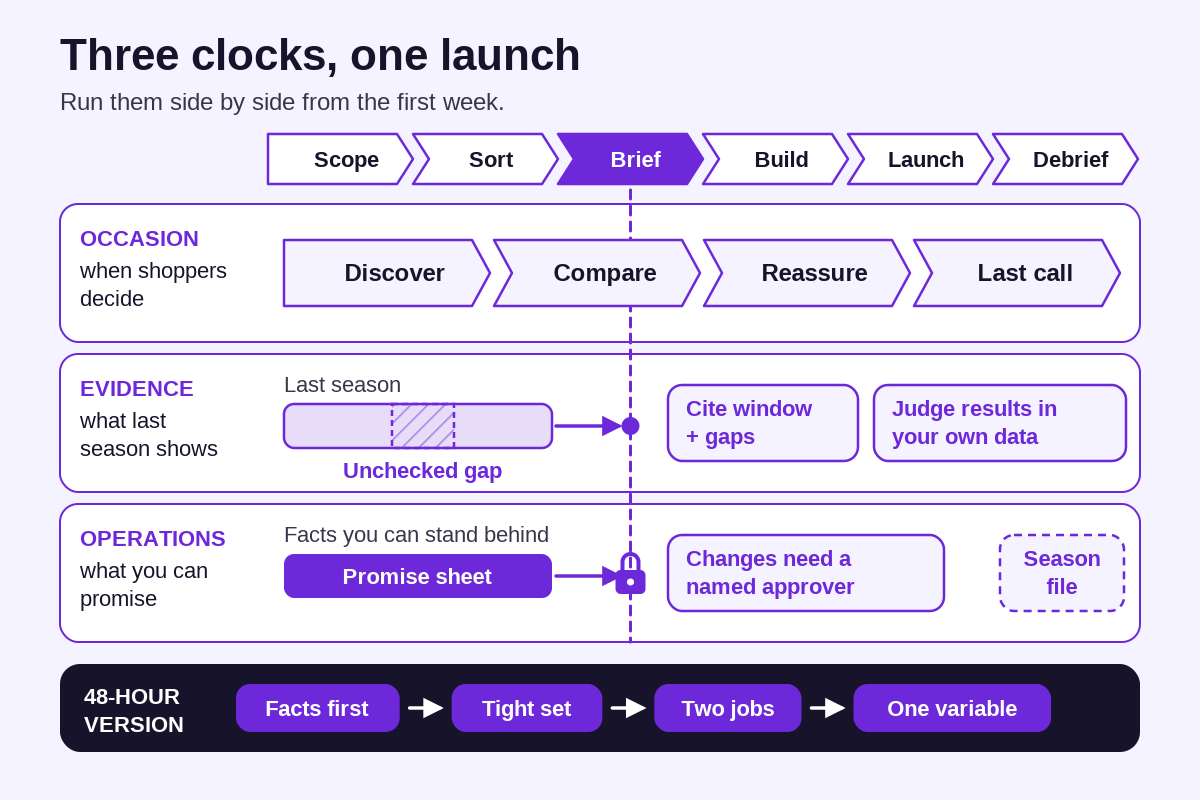
Seasonal creative goes wrong when research starts after the calendar already has. Work back from the occasion with three clocks, a parallel plan and a 48-hour rescue version.
A deck of competitor screenshots invites opinions. A decision memo with scope, evidence and options invites approvals. Here is the structure, block by block, with a template.
AI can summarize a folder of competitor ads in seconds and sound sure about things the records never said. Here is how to prompt for receipts, limits and honest uncertainty.
An ad makes a promise; the page either keeps it or quietly renegotiates. Learn to record the ad’s promise, compare it with the public destination, and run the same audit on your own ad and page.
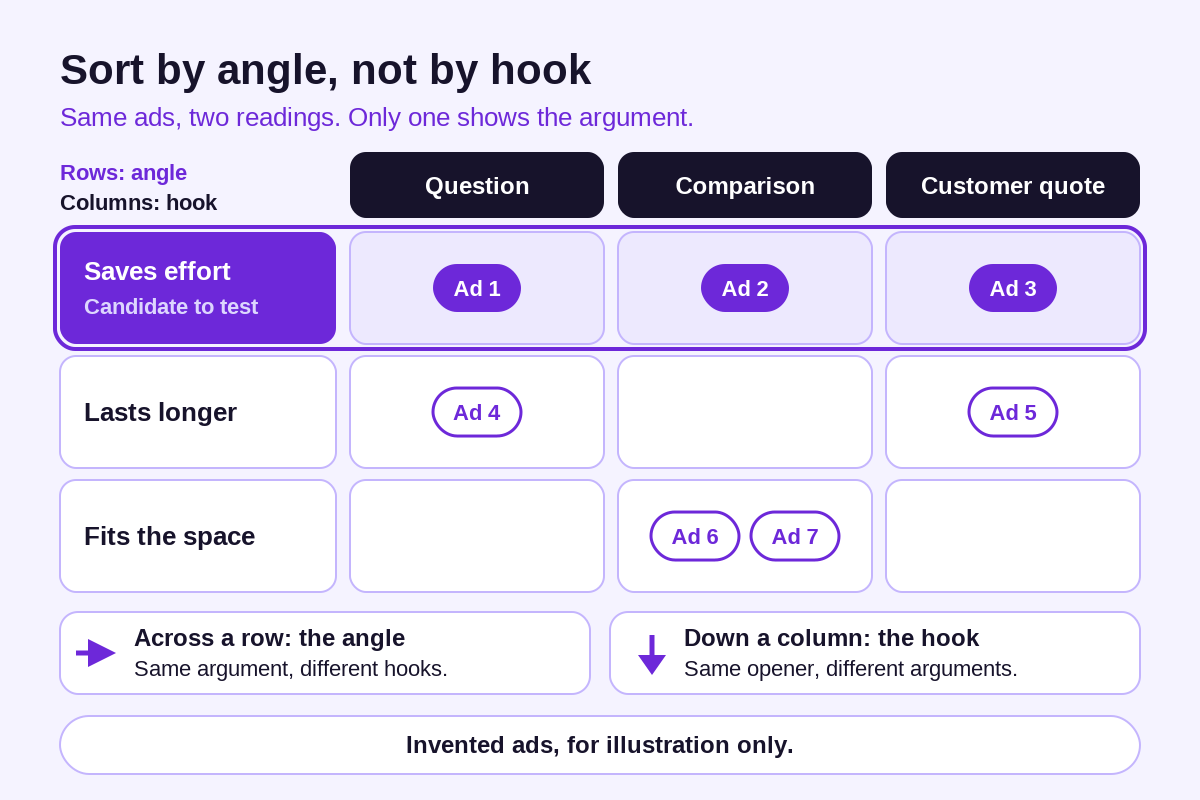
A question, a comparison and a customer quote are hooks. The reason to buy underneath them is the angle. Learn to sort competitor ads by angle and pick one candidate worth a clean test.
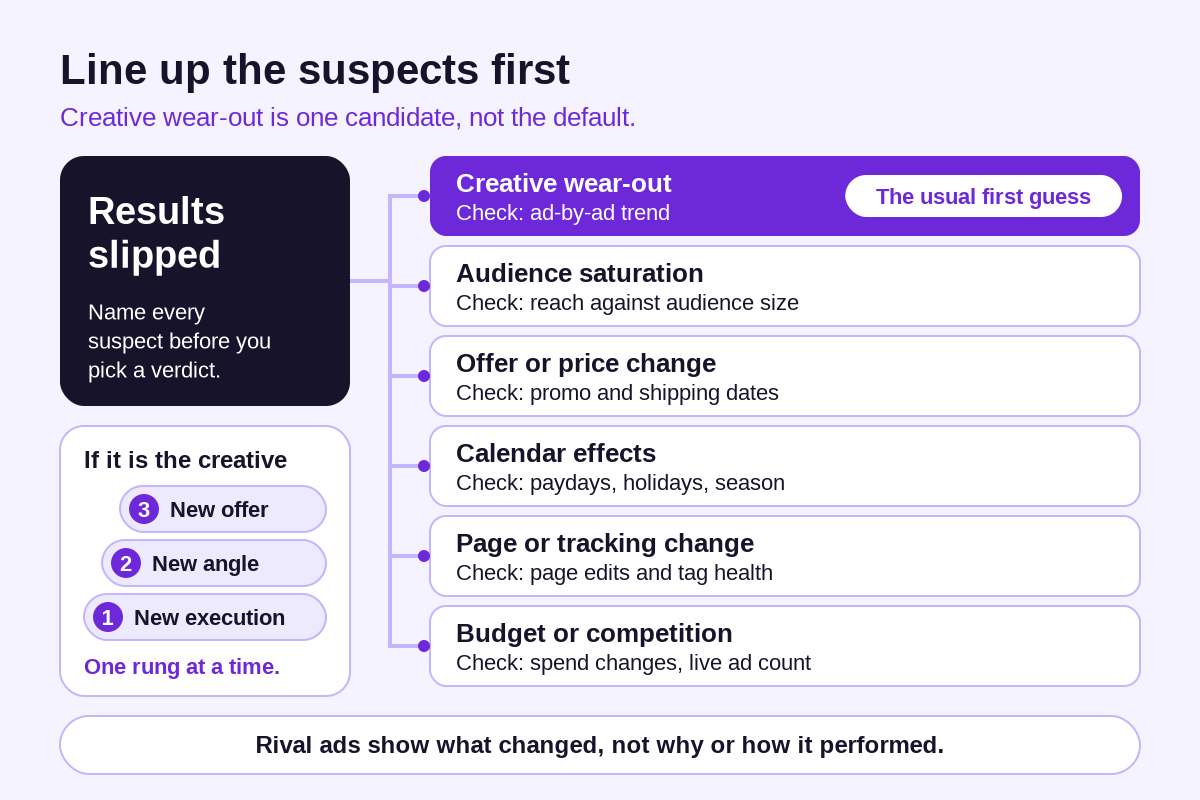
Results slipped and everyone says “fatigue.” Line up the other suspects first, then use competitor research for what it can do: show how others change their message versus their execution.
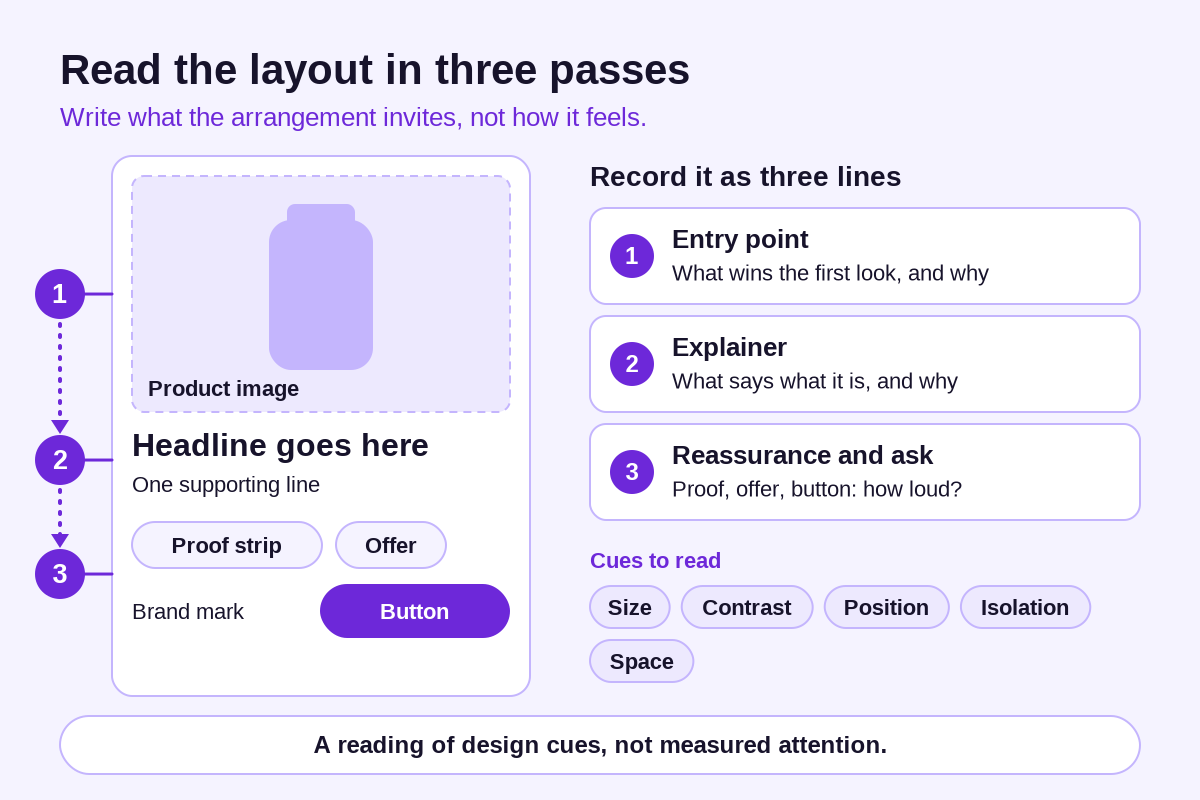
Learn to read what a static ad asks the eye to do first, second and third, then write it down as a hierarchy spec your designer can use without tracing anyone else’s layout.
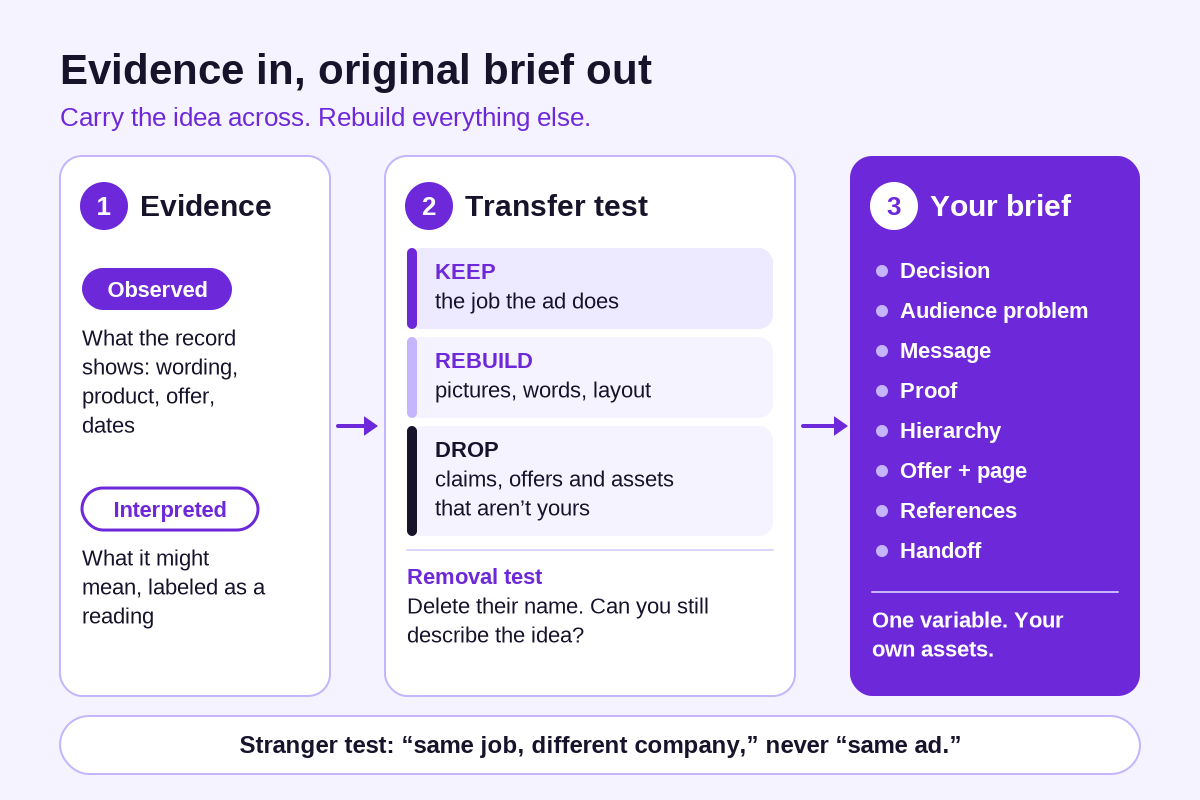
A repeatable method for turning competitor ad observations into a brief your designer can build: separate what you saw from what you infer, filter what transfers, and keep the work original.
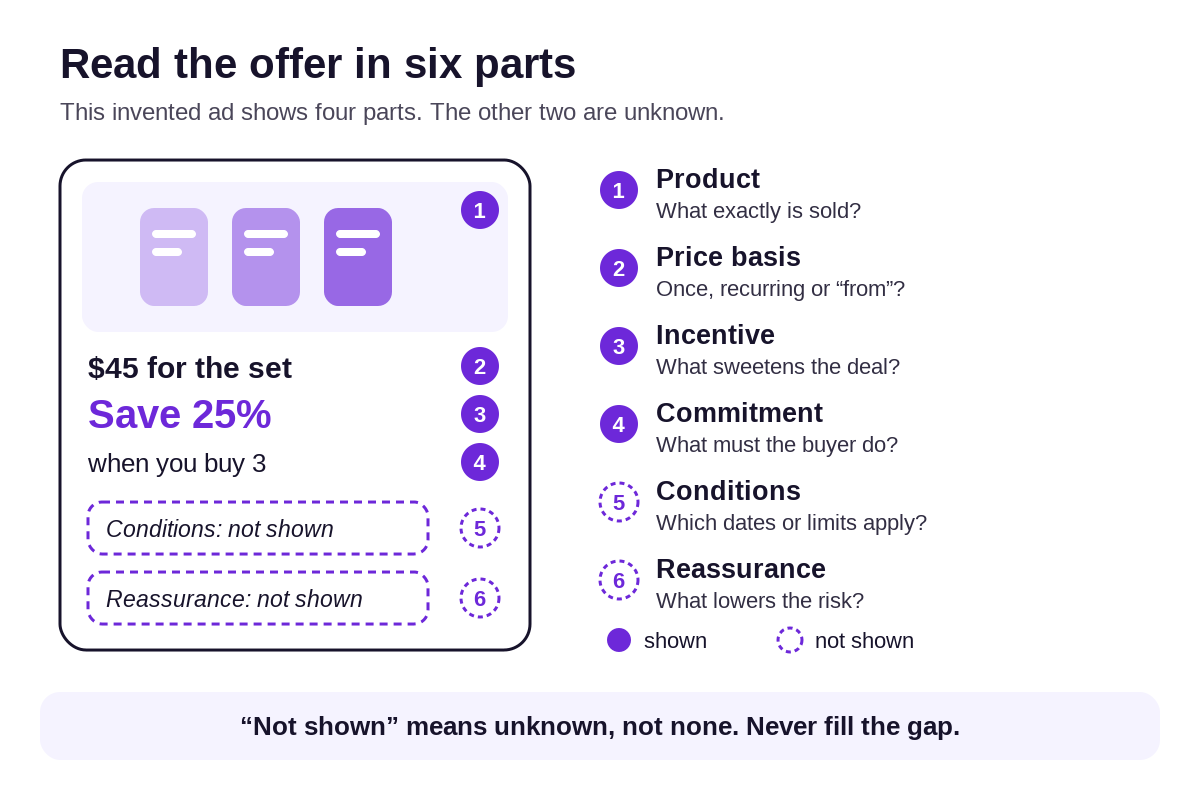
A 25% headline is not automatically a bigger offer than 20% or 15%. Read an offer in six parts, keep the wording and the unknowns, and turn the comparison into a creative test.
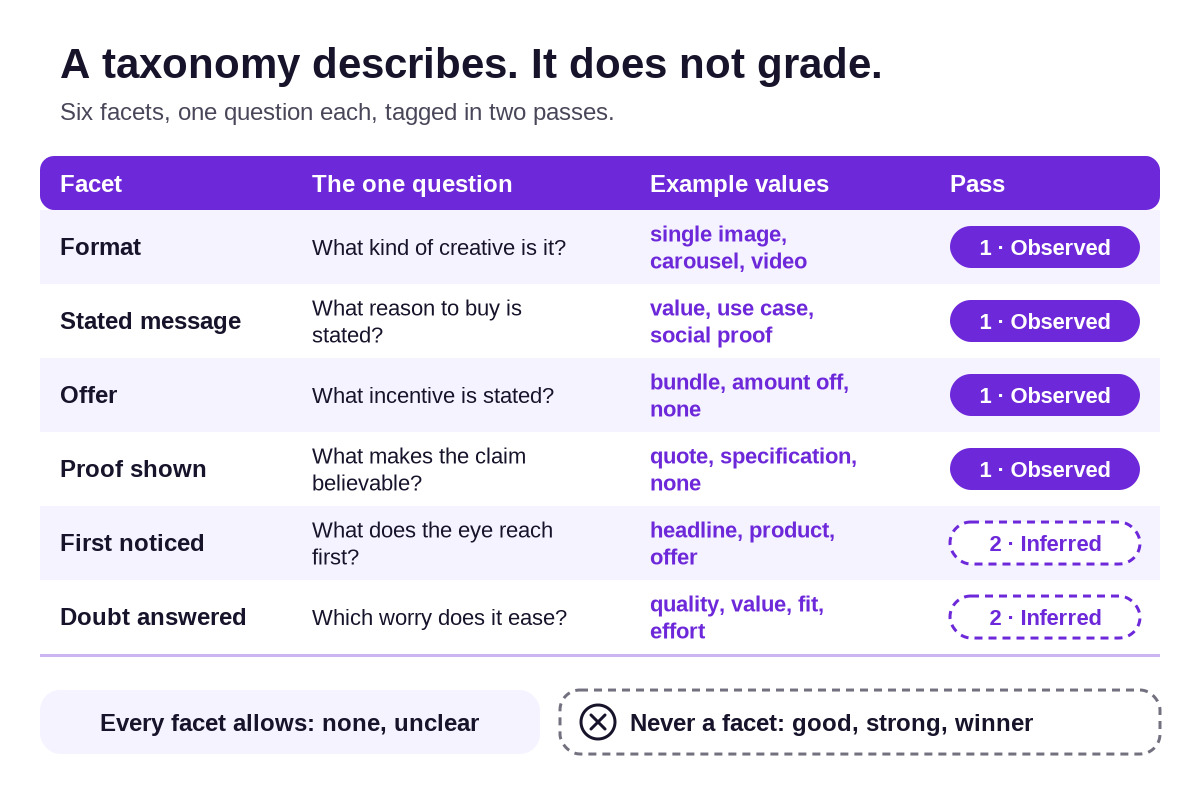
“Strong hook” and “premium” are verdicts, not tags. Build a small taxonomy of observed and inferred facets so your team can count, filter and compare ads next quarter.
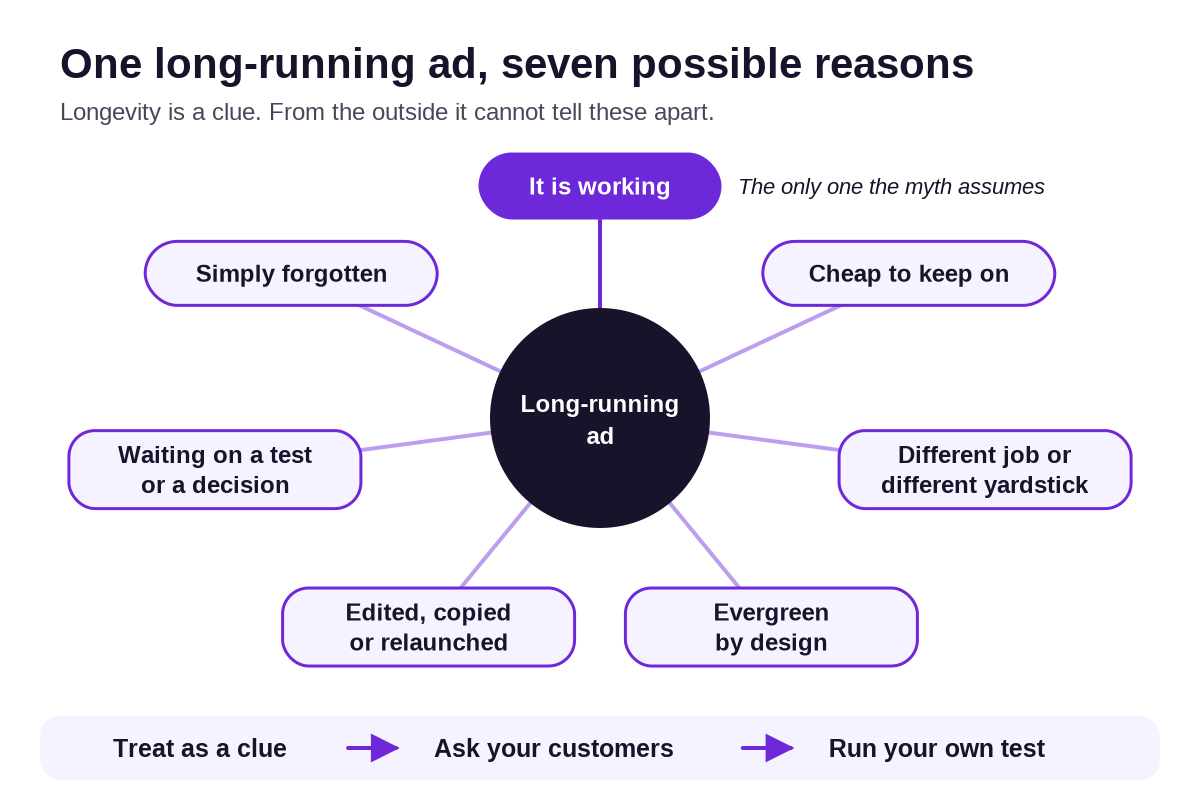
A competitor ad that has run for months deserves a look, but it cannot tell you what it earned. Here are seven other explanations, a clue ladder and safer language for your notes.
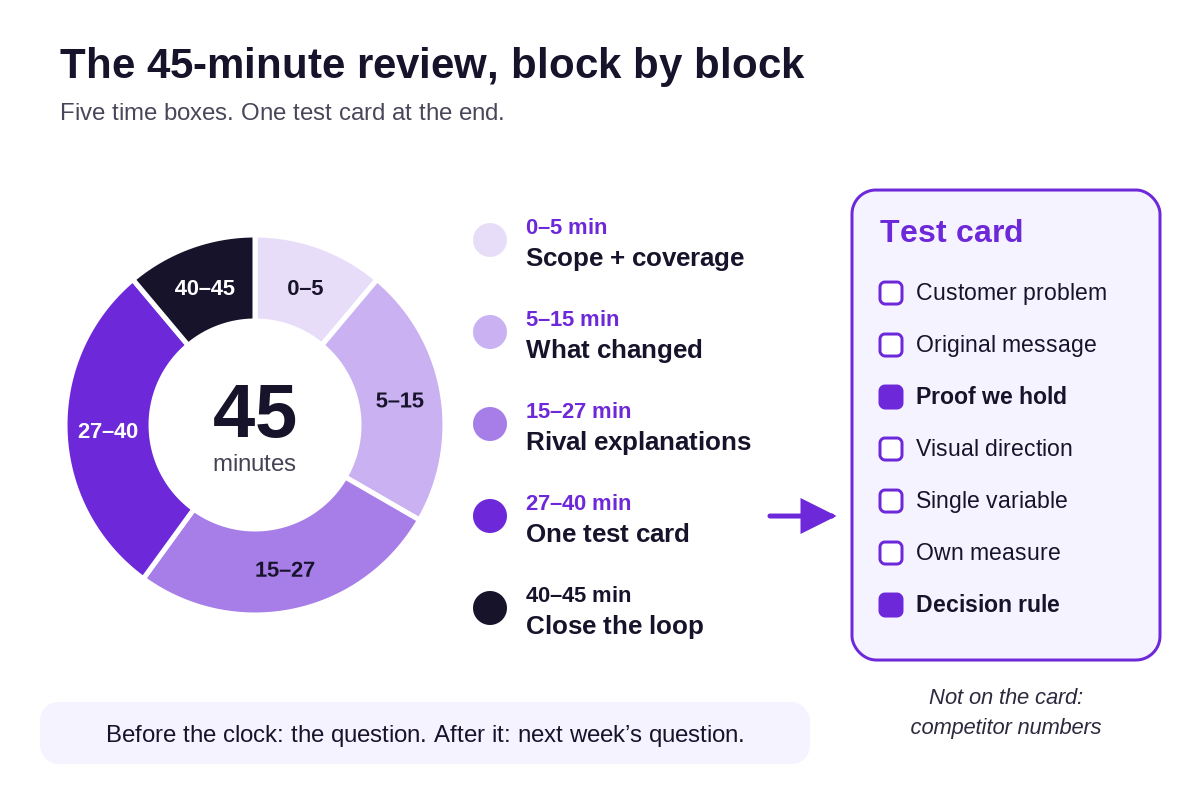
A weekly competitor ad review works better with a clock. Five timed blocks take you from a coverage check to one test card with a proof line and a decision rule.
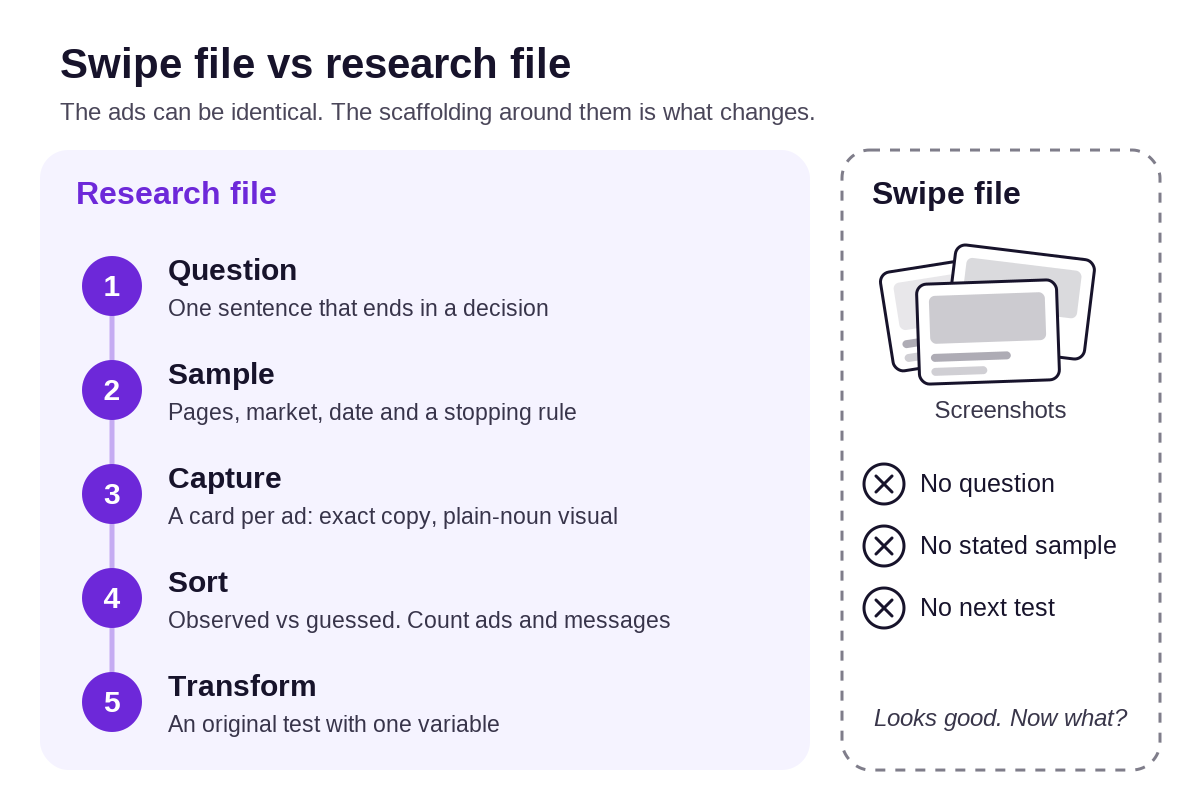
A swipe file stores what looked good. Research starts with a question, a declared sample and notes that separate what you saw from what you suspect. Here is a five-move method.