From Competitor Evidence to an Original Creative Brief
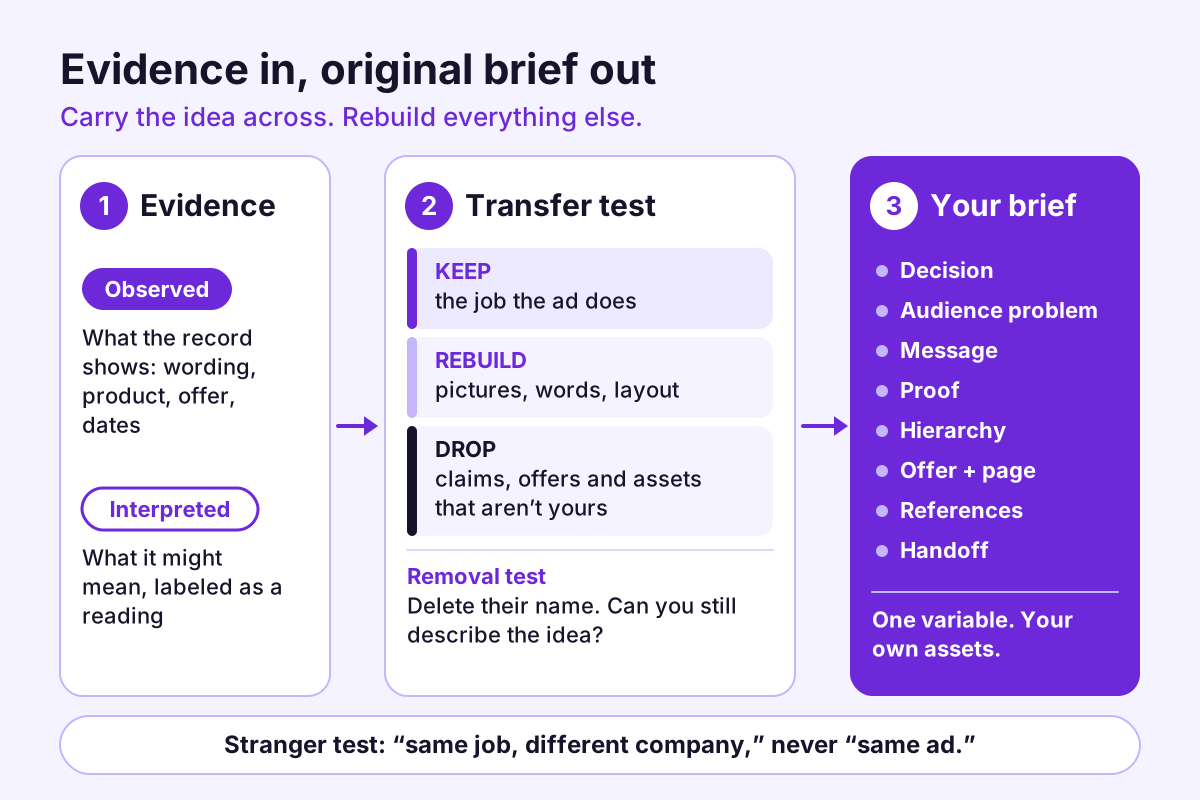
A repeatable method for turning competitor ad observations into a brief your designer can build: separate what you saw from what you infer, filter what transfers, and keep the work original.
Ad8 Journal
Better questions. Inspectable evidence. Original ideas worth testing. Field guides for the work between finding an ad and deciding what to make next.
New articles every two days.
A repeatable method for turning competitor ad observations into a brief your designer can build: separate what you saw from what you infer, filter what transfers, and keep the work original.
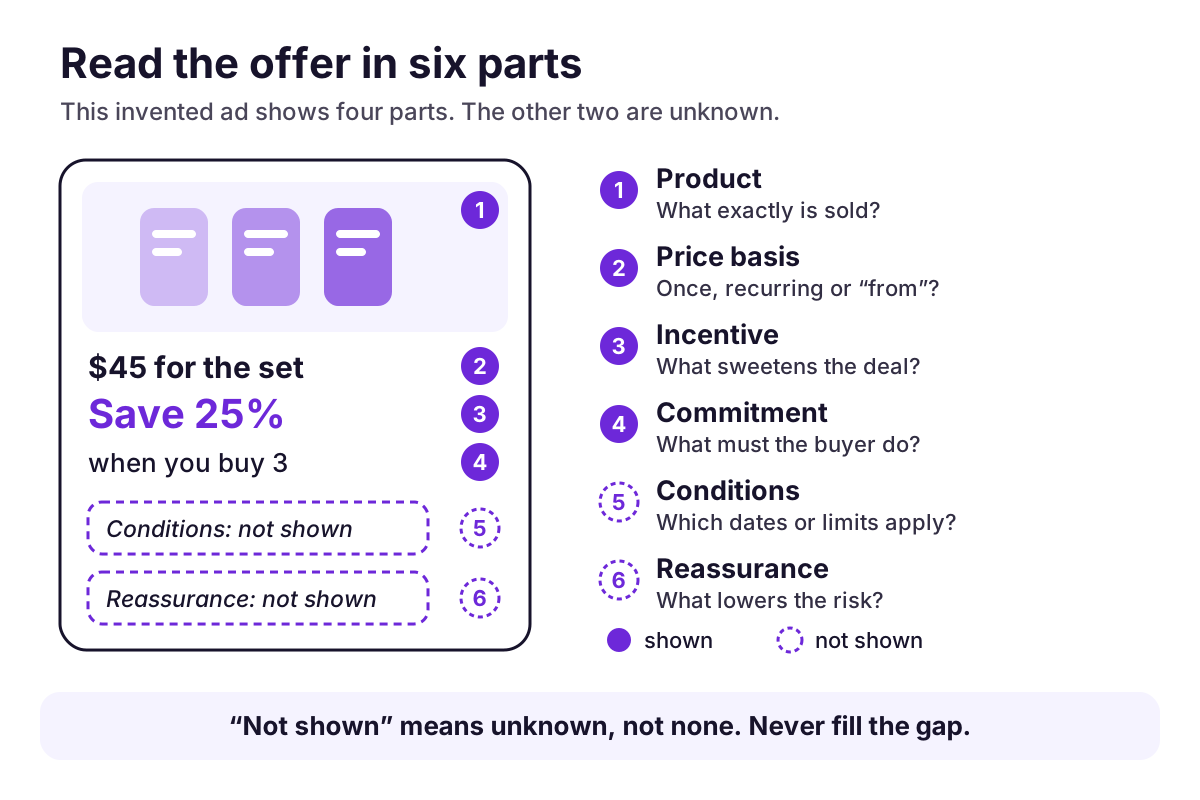
A 25% headline is not automatically a bigger offer than 20% or 15%. Read an offer in six parts, keep the wording and the unknowns, and turn the comparison into a creative test.
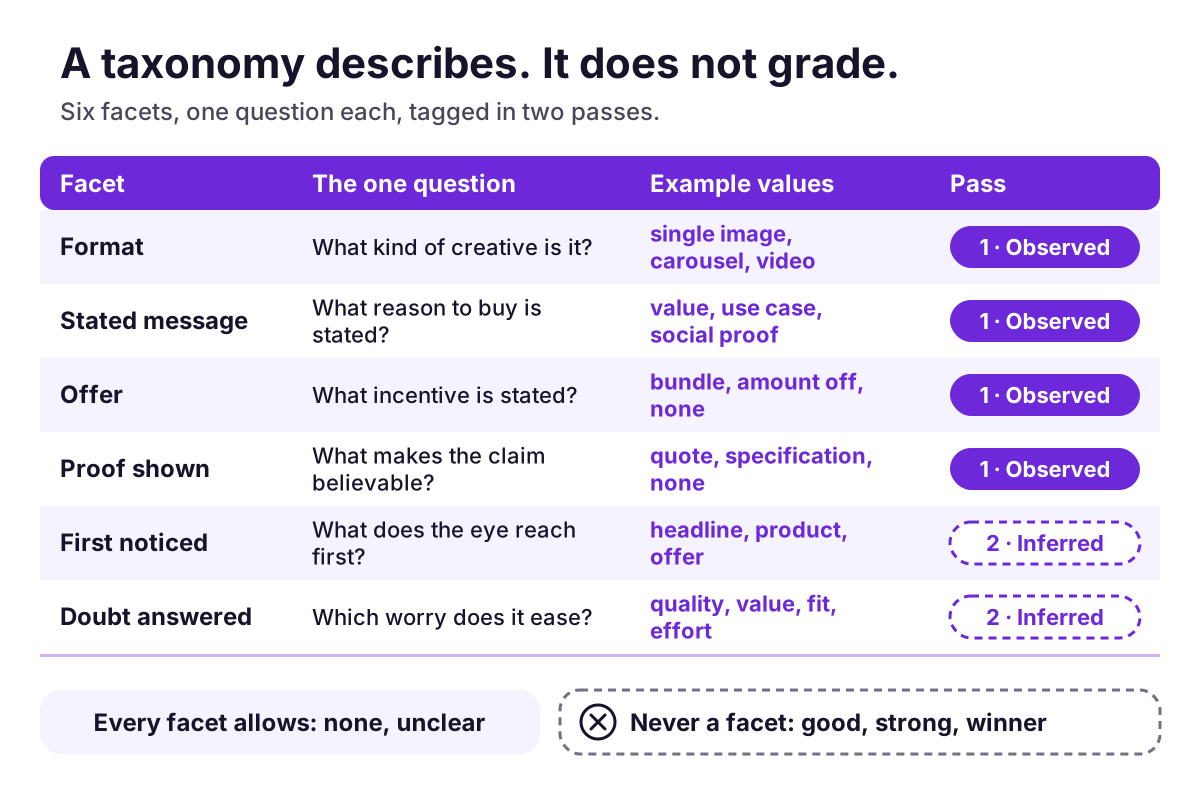
“Strong hook” and “premium” are verdicts, not tags. Build a small taxonomy of observed and inferred facets so your team can count, filter and compare ads next quarter.
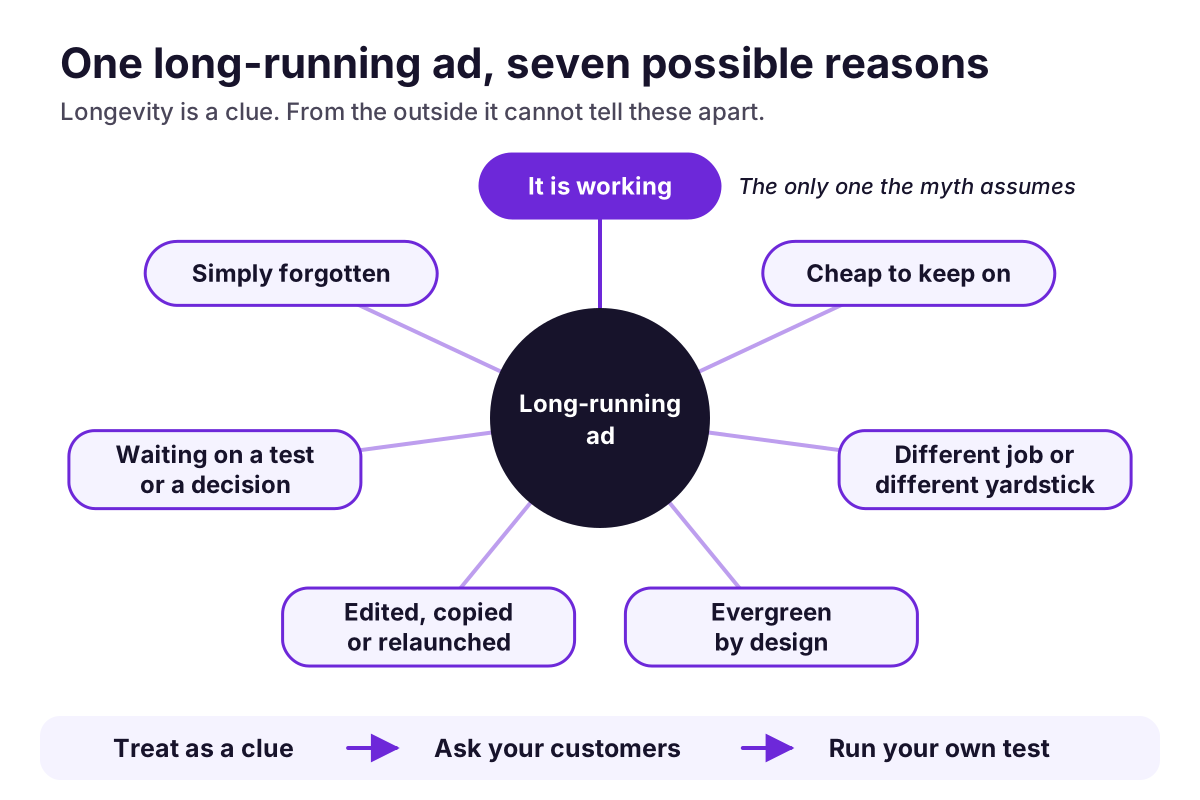
A competitor ad that has run for months deserves a look, but it cannot tell you what it earned. Here are seven other explanations, a clue ladder and safer language for your notes.
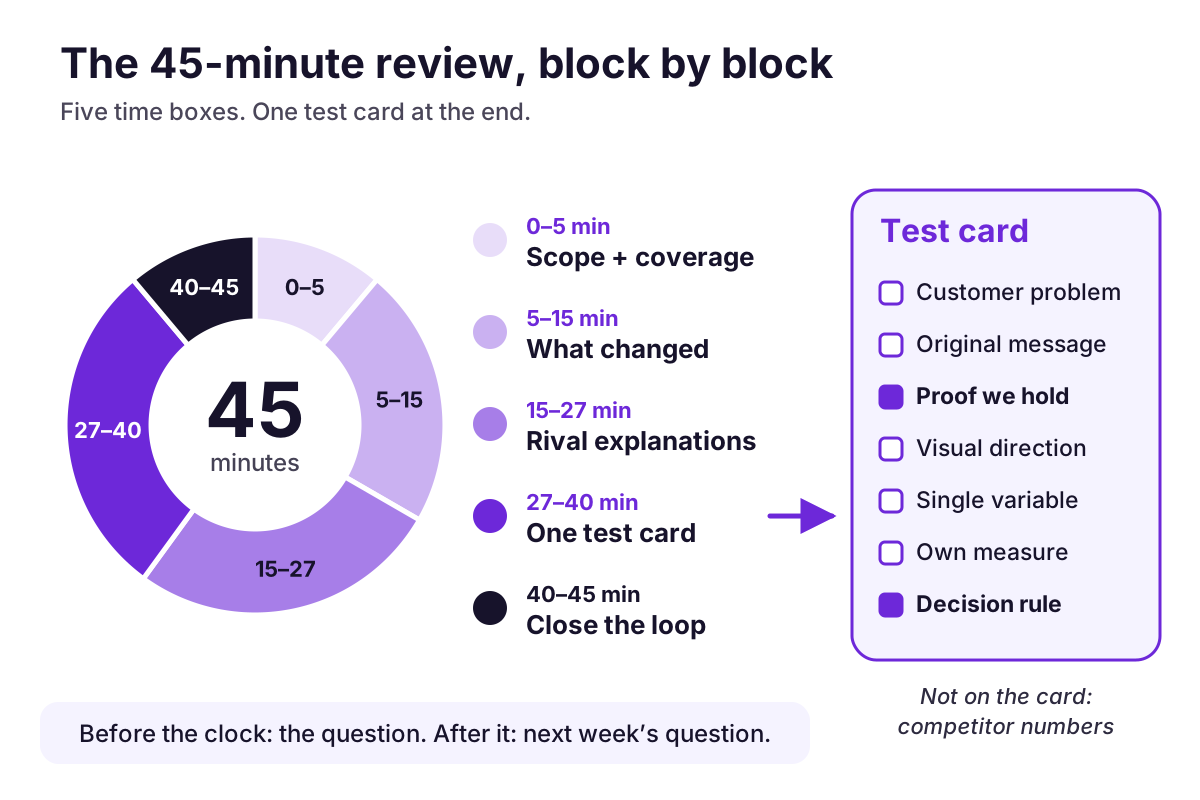
A weekly competitor ad review works better with a clock. Five timed blocks take you from a coverage check to one test card with a proof line and a decision rule.
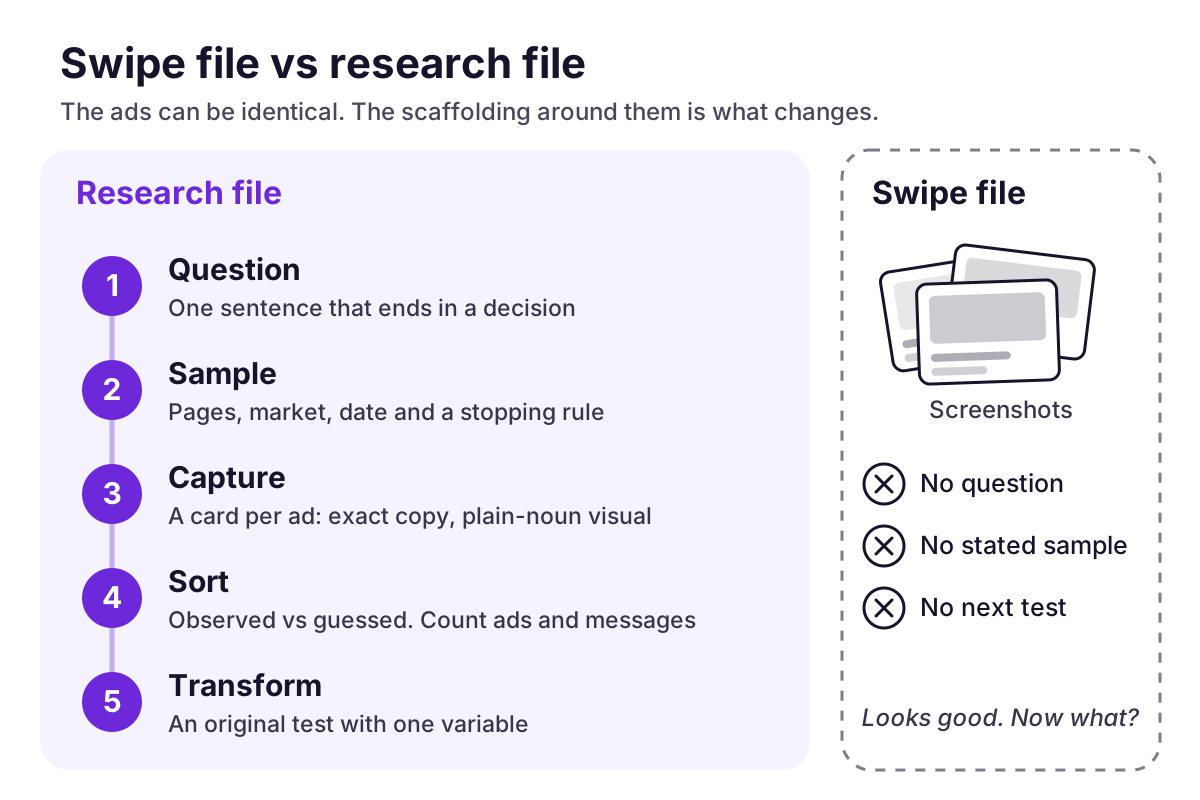
A swipe file stores what looked good. Research starts with a question, a declared sample and notes that separate what you saw from what you suspect. Here is a five-move method.